Forensic Animation Services
Animation for the courtroom
When creating an animated video for demonstrative evidence purposes, photorealism and visual effects become secondary considerations. Technical accuracy is paramount, and an accurate and well presented visualization can help jurors quickly grasp that to which your expert witness is testifying. This technical accuracy is also what allows your animated evidence to be admissible, even after review from opposing counsel. Some common uses during the litigation process, from arbitration to trial:
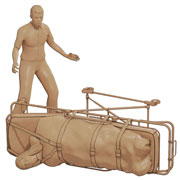
- Show actual and “what-if” scenarios for automobile accident reenactments
- Compare medical procedures for malpractice cases
- Recreate product malfunctions for product liability litigation
- Reconstruct personal injury events due to violent crime or industrial accident
During the production process, it is crucial for us to communicate effectively with your expert witnesses. Our forensic animator, Joel Howe, handles all steps of the process, from storyboard to final rendering. Drawing on over 20 years of engineering, visual design, and 3d visualization experience, he is able to efficiently translate the expert witness's testimony into a courtroom-ready animated video. With a Master's degree in mechanical engineering, he can also testify to the accuracy and validity of the process used to create the animation.
Forensic animation benefits
Regardless of the case, the forensic animation production process can be very useful prior to the trial, allowing you to visually evaluate the merits of your case, or to help expedite a settlement during arbitration or mediation. The early phases of a project will result in a thorough review of the evidence as it is created in a virtual 3D scene. This review may help identify missing information or inconsistencies in the case evidence.
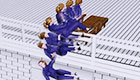
If going to trial, the primary benefit of using animation as demonstrative evidence is to maximize the jury's understanding of a specific concept or point. Animated video is an excellent way to quickly explain a complex or time-dependent topic, such as how machinery operates. Recreating the sequence of events leading up to an accident or crime will allow members of the jury to experience these events as animations from multiple points of view. In any case, the video presented should establish counsel and/or the expert witness as an authority on the points being addressed to the jury.
Production cost considerations
At Framework Media, the cost of creating a forensic animation can range anywhere from $2,000 to $20,000, depending upon duration and scene complexity. The complexity of the scene is based on the number of objects in a scene and to what level of detail those objects are to be represented. Total video runtime may be different than the duration of the actual event if multiple viewpoints, multiple scenarios, or slow motion replays are included.
Since there are so many factors that affect the development cost and each case is unique, it is best to request a free consultation. We will deliver a detailed quote with an itemized list of deliverables, complete with a cost associated for each deliverable.
Schedules and planning
Simpler forensic animations can be created in as little as a week. More comprehensive projects can take 90 days or more to develop. Projects with many different attorneys and/or expert witnesses reviewing the work require extra time for reviews and revisions. All cases require timely and complete access to the pertinent evidence to maintain a preset schedule. Early involvement in the case can yield significant benefits, validating evidence and providing an advantage in settlement negotiations. Any production schedule should take into consideration time for opposing counsel to review the animation before going to trial.
Admissibility guidelines
The considerations for admissibility are unique to each case, and no one can guarantee a specific video will be admissible. However, as courtrooms become more comfortable with animated content, admissibility guidelines are becoming more defined. Assuming it is to be used to support your expert witness's testimony, your forensic animation will be submitted as demonstrative evidence and subject to the same admissibility criteria as a traditional chart or diagram:
- Authenticity: Your expert witness must be able to authenticate the animation as a fair and accurate visual representation of his or her testimony.
- Relevance: The actions and elements depicted in the video should be limited to those specific to the case to ensure relevance.
- Probative value: To minimize the danger of unfair prejudice, focus on delivering facts and avoid including graphic images that will emotionally shock jurors.
While the legal team is responsible for developing the legal strategy to ensure admissibility, we constantly evaluate and make recommendations regarding admissibility and message effectiveness. Successive design reviews ensure that the information in the animation aligns with the rest of the case being presented, meeting the attorneys' narrative needs while staying true to the experts' testimony.
Presentation
DVDs or computer video files are the formats of choice for today's courtroom presentations. DVD players are more of a backup option, with most audio/video systems allowing playback of videos from a computer or USB external drive. Embedding video into a PowerPoint presentation is another option. For very complex cases, you may need a completely customized mechanism for presenting content, including interactive multi-viewpoint tools or real-time display of the 3D models. In this case, we can develop custom applications to display that content and deliver them as self-contained Windows or Mac OS applications.